

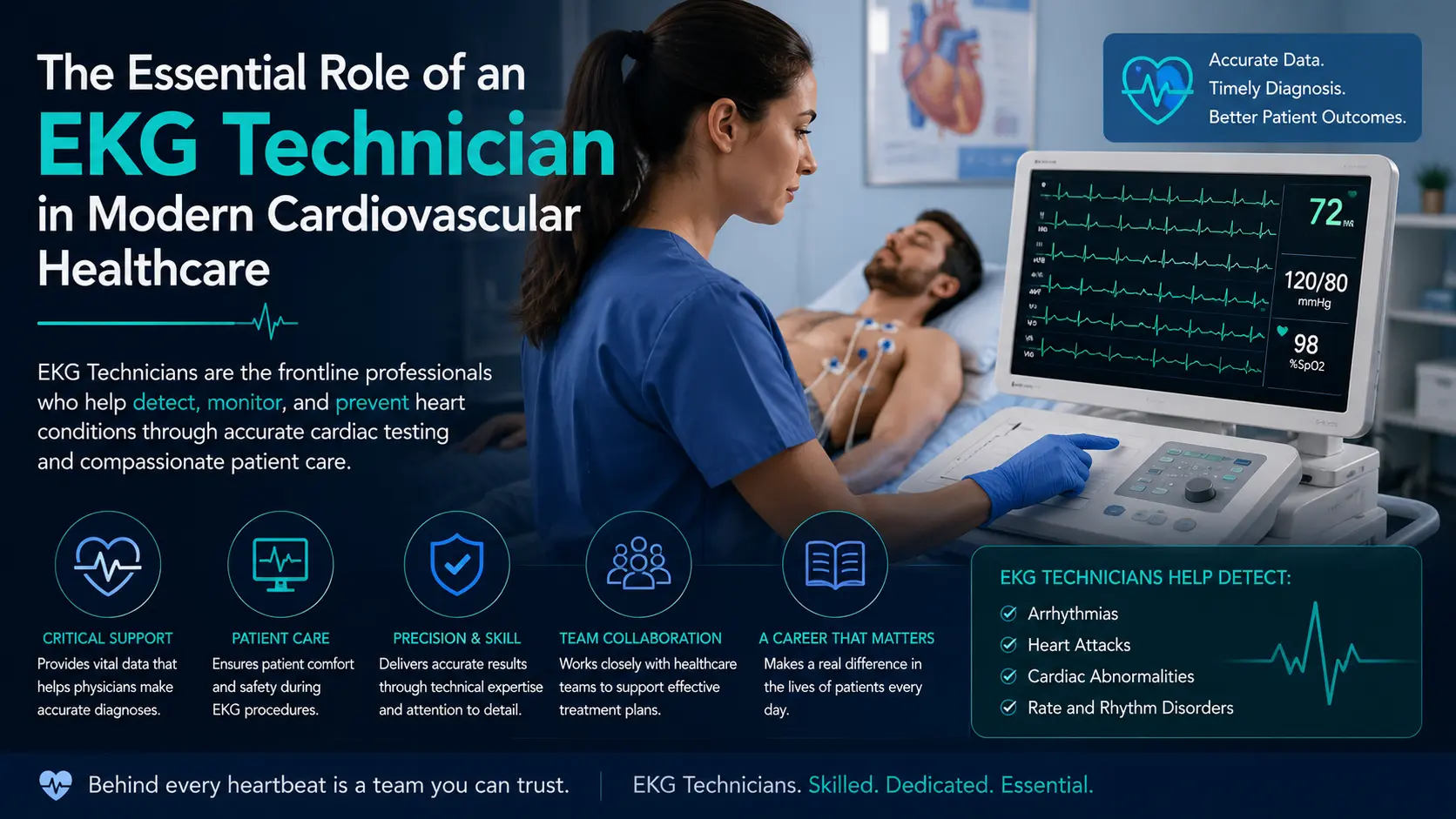
The diagnostic landscape of contemporary medicine relies on highly trained allied health professionals who bridge the gap between patient care and advanced medical technology. Within cardiovascular medicine, the ekg technician serves as a vital first line of data collection, operating the machinery that monitors, records, and traces the heart’s delicate electrical activity. Patients presenting with chest pain, unverified arrhythmias, or chronic high blood pressure are routinely directed to these specialists to establish a clear baseline of their cardiac health. By translating complex cardiodynamic metrics into precise wave tracings, these professionals provide the clinical foundational data that cardiologists require to form lifesaving treatment methodologies. This structural focus ensures that care facilities operate with absolute empirical clarity, minimizing diagnostic delays and mitigating long-term patient risks.
+------------------------------------+------------------------------------+
| Traditional Cardiac Screening      | Modern EKG Technical Paradigm      |
+------------------------------------+------------------------------------+
| High reliance on invasive testing  | Non-invasive, instantaneous diagnostics|
+------------------------------------+------------------------------------+
| Fragmented clinical telemetry      | Unified data streams via 12-lead setups|
+------------------------------------+------------------------------------+
| Delayed artifact interpretation    | Real-time digital signal analysis  |
+------------------------------------+------------------------------------+
Operating electrocardiograph machinery requires a precise blend of technical expertise and intentional patient interaction, ensuring that data is collected accurately and ethically. A skilled specialist manages everything from standard structural 12-lead monitoring configurations to mobile telemetry protocols, adjusting their methods based on each patient’s physical limitations and medical history. Rather than working in isolation, they function as collaborative nodes within larger healthcare networks, supporting emergency medicine divisions, outpatient laboratories, and independent cardiology clinics. This strategic integration highlights how non-invasive diagnostics have evolved, allowing modern hospitals to move away from legacy methods and adopt high-speed, digital wave analysis. Consequently, the position stands as a highly desirable career choice for individuals looking to join the healthcare sector without spending years earning a traditional medical degree.
Bridging Medical Hardware and Direct Patient Care
The structural framework of an electrocardiograph procedure requires the practitioner to handle technical mechanics while helping the patient feel relaxed and comfortable. Because individuals undergoing heart monitoring are often anxious about their health, the technician must maintain a calm, empathetic, and professional presence during the evaluation. This delicate balance ensures that the physical signs of stress do not alter the reading, protecting the baseline data from external variations.
By combining careful electrode placement with clear, reassuring communication, the specialist creates a reliable environment for accurate testing. This workflow systematically eliminates technical errors caused by patient movement or misplaced leads, saving valuable clinical time. This standard approach transforms what could be a stressful experience into a efficient, productive routine, showing that patient comfort is directly tied to diagnostic quality.
Essential Job Responsibilities and Everyday Medical Testing
The daily routine of an ekg technician involves a wide range of responsibilities, each requiring a strict commitment to clinical protocols and accuracy. The primary responsibility centers on administering standard resting 12-lead electrocardiograms, which involves placing adhesive electrodes across specific anatomical points on the patient’s limbs and chest area. Misplacing an electrode by even a single centimeter can alter the electrical tracing, potentially leading to diagnostic errors or masking an active heart condition. Beyond simple electrode positioning, these professionals must check the operational status of their testing equipment, handle basic software configuration tasks, and resolve minor electrical interference issues before the patient arrives.
+----------------------------+-----------------------------------------------+
| Core Technical Duty        | Measured Clinical Objective                   |
+----------------------------+-----------------------------------------------+
| Electrode Localization     | Eliminating wave artifacts via exact placement|
+----------------------------+-----------------------------------------------+
| Telemetry Calibration      | Securing clear signal feeds across portable nodes|
+----------------------------+-----------------------------------------------+
| Documentation Lifecycle    | Archiving data securely within local EHR logs |
+----------------------------+-----------------------------------------------+
Additionally, technicians assist with exercise electrocardiograms, commonly known as stress tests, which track how the heart performs under physical exertion on a treadmill or stationary bike. During these specialized sessions, the specialist checks blood pressure variations, monitors heart rate changes, and stays alert for physical symptoms like shortness of breath or dizziness. They are also responsible for managing ambulatory telemetry systems, such as Holter monitors, which record a patient’s heart rhythm continuously over 24 to 72 hours. Safely downloading this data and archiving it within the facility’s Electronic Health Record (EHR) database completes their daily workflow. This systematic tracking provides a seamless information chain that keeps the entire medical team aligned and informed.
Recognizing Critical Waves and Emergent Anomalies
While technicians do not officially diagnose conditions, they must possess the deep anatomical knowledge required to instantly spot life-threatening wave patterns on the display. Spotting serious anomalies, like severe ventricular tachycardia or acute myocardial infarction patterns, requires immediate action according to hospital emergency guidelines.
This active vigilance helps prevent major delays in critical care, allowing physicians to step in and stabilize the patient quickly. By acting as an early warning system, these specialists protect patient safety, showing that the position demands analytical focus alongside practical technical skills.
Educational Pathways and Professional Certification Choices
Entering the healthcare field through cardiodynamic diagnostics requires a structured approach to education, though it takes significantly less time than most traditional medical professions. The baseline prerequisite for enrolling in a recognized training program is a high school diploma or a general education development (GED) equivalent. Aspiring students can select from several educational pathways, including specialized certificate programs at vocational schools, dedicated courses at community colleges, or structured on-the-job training in hospital settings. These educational frameworks typically take between three to six months to complete, focusing heavily on cardiac anatomy, electrophysiology, lead placement protocols, and basic rhythm interpretation.
Earning a national certification drastically improves an applicant’s career prospects and is often required by major healthcare systems and specialized outpatient networks. The most widely recognized credential in the industry is the Certified EKG Technician (CET) designation, which is administered through the National Healthcareer Association (NHA). Preparing for this comprehensive exam involves mastering core competencies, passing clinical practice evaluations, and logging a specific number of successful live lead placements during training. Maintaining this credential requires completing continuing education units regularly, ensuring that practitioners stay up to date on new software tools and diagnostic technologies.
Broadening Allied Health Credentials for Long-Term Growth
Many professionals choose to combine their cardiac training with related medical skills, such as earning certifications in phlebotomy or patient care technology. This multifaceted approach creates highly versatile allied health professionals who can easily manage diverse responsibilities in busy urgent care clinics and medical practices.
This strategic versatility increases an individual’s marketability, making them highly resilient during shifts in healthcare hiring trends. It transforms an entry-level technical position into a flexible foundation for career growth, opening pathways toward advanced roles in cardiovascular technology or nursing.
Navigating Diverse Work Environments and Scheduling Options
Certified professionals can choose from a wide variety of work environments, allowing them to match their employment with their ideal lifestyle and long-term career goals. Large general hospitals are the primary employers in the field, where technicians operate in dedicated cardiology labs, assist inside active emergency rooms, or manage mobile testing carts across intensive care floors. Because inpatient hospital systems run 24 hours a day, technicians in these environments can choose from flexible scheduling configurations, including night shifts, weekend blocks, or on-call rotations. This continuous operation ensures a steady stream of career opportunities, but it requires a high level of physical stamina and adaptability.
For individuals who prefer structured, predictable hours and a more consistent routine, private physician offices, specialized cardiology practices, and independent diagnostic laboratories offer an appealing alternative. These outpatient facilities typically operate during standard business hours, providing a reliable schedule with minimal weekend or holiday commitments. The testing pace in these environments is often more controlled, allowing for deeper patient interactions and more consistent administrative workflows. This flexibility across different work settings allows professionals to transition smoothly between fast-paced hospital divisions and calm, specialized clinics throughout their careers without needing to retrain.
The Unique Demands of Mobile Diagnostics and Outpatient Care
Outpatient care centers and independent diagnostic labs present distinct operational challenges, requiring technicians to manage their time carefully and work independently. In these settings, specialists often manage the entire testing sequence alone, from registering the patient to maintaining the equipment without direct on-site supervision.
This autonomy helps build strong professional confidence, turning routine technical tasks into a true mastery of diagnostic operations. It shows that versatility across different environments is highly valuable, ensuring a rewarding career path for adaptable healthcare professionals.
The Economic Outlook and Long-Term Career Demand
The long-term career outlook for diagnostic specialists remains exceptionally strong, driven by shifting global demographics and an aging population requiring more cardiac monitoring. Cardiovascular diseases continue to be a leading health challenge across modern nations, increasing the demand for reliable, accessible, and non-invasive screening methods. Healthcare systems are actively expanding their diagnostic divisions to identify heart vulnerabilities early, aiming to minimize expensive emergency interventions and improve long-term patient outcomes. This steady expansion guarantees a reliable job market for certified professionals, with many facilities reporting difficulty finding enough qualified applicants to fill their openings.
+----------------------------+-----------------------------------------------+
| Economic Metric            | Current Industry Value Range                  |
+----------------------------+-----------------------------------------------+
| Median National Hourly Wage| $24.80 - $30.00 (Varies by location)          |
+----------------------------+-----------------------------------------------+
| Projected Sector Expansion | Much faster than average occupational growth   |
+----------------------------+-----------------------------------------------+
| Employer Demand Indicator  | 25% of health systems report open vacancies   |
+----------------------------+-----------------------------------------------+
Compensation varies based on geographical location, formal certification, and the specific setting, but the role offers excellent return on investment relative to the required training time. Technicians working within specialized outpatient care centers or high-volume diagnostic laboratories often command premium wages compared to general hospital employees. Furthermore, the role serves as an exceptional stepping stone for individuals planning to advance into more complex medical positions later in life. The daily exposure to clinical environments, direct patient interaction, and real-time data analysis builds foundational skills that translate perfectly into advanced cardiac sonography, nursing, or medical assistant careers.
Capitalizing on Demographic Trends and Technical Shifts
As health insurance structures place greater emphasis on preventative screening, the overall volume of routine heart monitoring procedures continues to rise steadily. This operational shift moves testing away from crowded emergency rooms and into local clinics, creating a more distributed job market for diagnostic professionals.
Staying ahead of these industry trends allows technicians to build stable, rewarding careers in high-demand fields. This ongoing growth ensures that specialized training remains highly valuable, providing long-term career security in a transforming medical landscape.
Frequently Asked Questions About EKG Technicians
FAQ 1: What is the main difference between an EKG technician and a cardiologist?
A technician is an allied health professional trained to place electrodes, operate monitoring hardware, and collect cardiac data, whereas a cardiologist is a licensed medical doctor who analyzes that data to diagnose conditions and prescribe treatments.
FAQ 2: Can I secure employment in this field without national certification?
While some facilities offer entry-level roles with on-the-job training, most modern healthcare systems prefer or explicitly require national certification, such as the NHA Certified EKG Technician (CET) credential, to ensure patient safety.
FAQ 3: How long does it typically take to complete a training program?
Most structured training courses offered by vocational institutions and community colleges take between three to six months to finish, combining traditional classroom learning with hands-on clinical practice.
FAQ 4: What specific physical attributes are required for this career?
The position requires excellent hand-eye coordination for precise electrode placement, good vision to monitor display screens, and strong physical stamina, as technicians spend long hours on their feet moving between testing areas.
FAQ 5: Is there an age or educational limit to entering this profession?
Applicants simply need a high school diploma or a GED equivalent to enroll in an accredited program, making the field highly accessible to recent graduates and adult career changers alike.
Conclusion
The steady career expansion of the certified ekg technician highlights a widespread demand for clear, reliable, and non-invasive cardiovascular diagnostic services. By combining mobile-first web metrics with strict clinical data collection protocols, these specialists deliver an exceptional level of support to modern cardiology divisions and patient care networks. In a fast-paced medical world where accuracy saves lives, utilizing a structured approach to heart monitoring saves time and protects patient health. Supporting balanced, fact-driven training pathways is an important step toward building a cleaner, more efficient, and more reliable healthcare ecosystem for everyone.p data-path-to-node=”0″>