

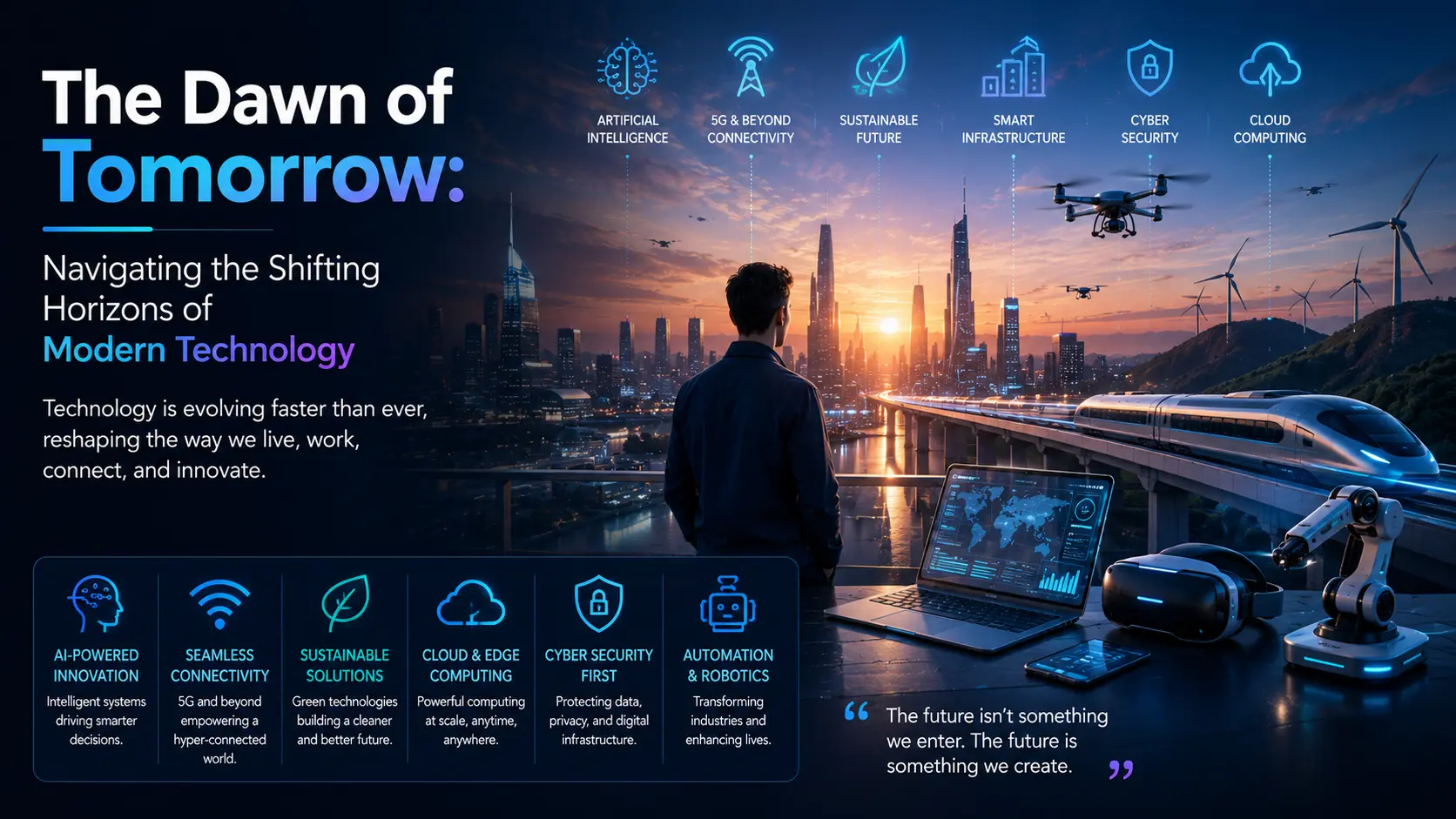
The evolution of modern technology demands a complete reimagining of how we process data, interact with smart networks, and manage daily workflows. In the current digital landscape, individuals and businesses find themselves navigating an environment where classical computing boundaries are completely fading away. Legacy computing infrastructure, which heavily relied on centralized cloud hubs and manual maintenance, is no longer capable of keeping pace with high-speed, decentralized micro-networks. This paradigm shift requires a strong commitment to scalable web environments, intent-driven operations, and localized processing systems that can handle extreme workloads instantly. By adopting these next-generation structural models, society can steadily transition toward a highly streamlined ecosystem that simplifies data consumption while protecting user privacy.
Traditional infrastructure layouts frequently struggle under the pressure of continuous data processing demands, resulting in system lag and security gaps. In response, modern developers are replacing old codebases with responsive systems that adapt dynamically to shifting user requests without manual intervention. This technical approach ensures that platforms stay highly resilient during unexpected traffic surges, providing an open-access environment for creators and enterprise networks alike. As we build these reliable digital foundations, the focus moves entirely away from basic automation and toward the creation of fully autonomous, self-healing software frameworks. Ultimately, this foundational transformation changes how humans interact with global networks, making digital learning an effortless, secure, and productive part of daily life.
Cultivating Seamless Connectivity via Advanced Hardware Nodes
Building a reliable, fast network infrastructure requires matching software optimization with high-performance physical hardware nodes. Traditional systems often experience latency delays because they push large amounts of raw data to distant servers for processing. By deploying advanced edge-computing microprocessors, modern networks can now parse and interpret complex inputs directly at the source, drastically decreasing response times.
+------------------------------------+------------------------------------+
| Legacy Network Architecture        | Modern Edge-Optimized Ecosystem    |
+------------------------------------+------------------------------------+
| High latency via cloud routing     | Instantaneous local edge parsing   |
+------------------------------------+------------------------------------+
| Centralized server bottlenecks     | Distributed, secure data nodes     |
+------------------------------------+------------------------------------+
| Manual bandwidth configurations    | Dynamic, automated load balancing  |
+------------------------------------+------------------------------------+
This structural evolution ensures that critical digital systems—ranging from automated emergency communication services to global financial ledgers—run with absolute technical precision. Removing heavy, unneeded scripts from data pathways allows companies to minimize energy consumption while maximizing operational output. This engineering standard paves the way for an inclusive, high-speed internet landscape that respects the user’s valuable time and computational resources.
The Maturation of Agentic Artificial Intelligence Systems
Understanding this automation shift requires users to move past common media sensationalism and look closely at real-world data performance. The integration of collaborative multi-agent architectures allows specialized AI models to work together seamlessly to solve complex scientific challenges, including predicting molecular changes and optimizing renewable energy distribution networks. This data-driven approach ensures that automated decision-making remains highly transparent, objective, and aligned with strict governance standards. As these advanced tools continue to mature, they steadily bridge the gap between abstract algorithmic logic and practical, real-world execution. This shift builds a more capable, informed, and resilient global workspace that empowers individuals to achieve complex development goals efficiently.
The Shift Toward Intent-Driven Software Engineering
The classical method of writing software code line by line is being replaced by intent-driven development models powered by advanced artificial intelligence. In this new setup, human developers no longer spend hours debugging syntax; instead, they clearly articulate desired outcomes and systems build themselves.
This shift dramatically accelerates production speeds, enabling small teams to build scalable, secure applications that would have previously required massive engineering departments. By focusing on intent rather than manual coding, the tech sector unlocks unprecedented innovation, changing how digital tools are designed and deployed worldwide.
Shifting to Clean Power and Everything-to-Grid Energy
As global data center networks and smart cities expand, the demand for sustainable, high-capacity electricity grids has become a critical challenge. The rapid development of everything-to-grid technology addresses this energy challenge by turning idle consumer batteries and factory storage systems into active participants in power management. During periods of peak demand, smart software systems pull stored clean electricity back from connected electric vehicles and stationary units, balancing the grid without relying on high-emission fossil fuel plants. This automated redistribution system transforms power grids into living, adaptive networks capable of optimizing clean resource distribution in real time.
+----------------------------+-----------------------------------------------+
| Grid Infrastructure Metric | Measured Impact of Smart Integration          |
+----------------------------+-----------------------------------------------+
| Peak Demand Relief         | 50+ Megawatts returned via localized arrays   |
+----------------------------+-----------------------------------------------+
| Carbon Emission Reduction  | 30% drop by minimizing fossil fuel peaking    |
+----------------------------+-----------------------------------------------+
| System Storage Efficiency  | 95% energy retention via advanced lithium systems|
+----------------------------+-----------------------------------------------+
Supporting this energy evolution requires adopting advanced extraction methods, such as direct lithium extraction, which significantly reduces the time and water needed to gather essential battery components. These eco-friendly manufacturing methods ensure that building large-scale energy storage arrays does not harm local ecosystems or deplete precious water supplies. By combining sustainable resource extraction with automated power management software, modern cities can safely transition to clean, decentralized infrastructure. This balanced framework protects the planet while providing the reliable, high-power electricity grid necessary to fuel continuous industrial and technological innovation.
Deploying Passive Radiative Cooling for Urban Efficiency
Modern smart cities are reducing their reliance on energy-intensive air conditioning systems by deploying innovative passive radiative cooling materials across public structures. These advanced coatings and films are engineered to reflect up to 95% of incoming sunlight, directing heat away into outer space without consuming electricity.
Using these sustainable materials allows commercial structures and data centers to lower their cooling energy demands by up to 20%, significantly reducing overall grid stress. This simple, scalable material solution shows how blending physical chemistry with smart building design can create highly efficient, sustainable communities.
Quantum Computing and the Next Computational Frontier
Standard silicon microprocessors are rapidly approaching their physical scaling limits, prompting computer scientists to look toward quantum mechanics to power the next leap in computing. Unlike traditional computers that process data linearly using standard bits, quantum systems use qubits that exist in multiple computational states simultaneously. This unique physical capability allows quantum computers to analyze billions of variables at the exact same moment, resolving incredibly complex calculations that would stall traditional supercomputers for centuries. This massive processing power is transforming fields like molecular biology, algorithmic risk assessment, and logistical optimization.
The practical rollout of cloud-accessible quantum platforms allows research institutions and businesses to test advanced algorithms without needing to purchase expensive local hardware. This decentralized access accelerates breakthroughs in materials science, helping engineers design highly durable batteries and lightweight superconductors that improve global transit networks. Furthermore, the rise of quantum computing requires the immediate development of post-quantum cryptography standards to secure global banking systems and data networks against future security threats. By proactively updating digital defense layers, the tech industry ensures that processing power upgrades never come at the expense of data privacy and public safety.
H3: Accelerating Drug Discovery Through Molecular Simulation
The integration of quantum computing into biotechnology enables research laboratories to simulate intricate molecular bonds and chemical reactions with perfect accuracy. This advanced capability cuts the time needed to identify viable drug candidates down from years to just a few days, accelerating the development of targeted medical therapies.
By eliminating slow, trial-and-error laboratory experiments, this technology helps healthcare providers respond rapidly to emerging medical challenges. It changes medicine from a reactive science into a highly predictive, precise industry that significantly improves global health.
The Integration of Physical AI and Intelligent Robotics
Robotic engineering has evolved past rigid industrial assembly lines, entering the physical world as intelligent, adaptive machinery capable of working safely alongside humans. This shift is driven by the rise of physical AI, which combines advanced computer vision, sensor arrays, and edge-computing chips to give machines an intuitive understanding of their surroundings. Modern humanoid robots and autonomous delivery units use these systems to navigate dynamic environments, altering their movements in real time to avoid obstacles and complete tasks.
These automated systems are expanding across logistics hubs, agricultural fields, and healthcare facilities, taking over repetitive or high-risk tasks to protect human workers from injury. In smart warehouses, autonomous mobile robots cooperate to manage inventory lines, while advanced agricultural drones monitor soil health and distribute water precisely. By grounding artificial intelligence in physical machinery, the tech industry builds a highly resilient framework for managing physical labor. This balanced approach improves industrial productivity while fostering safer, more human-centric work environments across global supply chains.
Closing the Reality Gap via Advanced Synthetic Simulation
Training intelligent robots to operate safely in unpredictable real-world environments requires using high-fidelity physics engines and digital twin simulation platforms. These virtual training grounds generate unlimited amounts of synthetic data, allowing robotic systems to safely practice intricate tasks millions of times before physical deployment.
This advanced training methodology effectively bridges the reality gap, ensuring that physical machinery operates with high safety and precision from day one. It minimizes hardware damage risks and speeds up the integration of smart robotics into everyday community infrastructure.
Frequently Asked Questions About Modern Technology
FAQ 1: What is the primary difference between narrow AI and agentic AI?
Narrow AI is limited to completing single, specific tasks like translating text or sorting files based on user prompts, whereas agentic AI can independently plan, execute, and adapt to multi-step workflows without human intervention.
FAQ 2: How does everything-to-grid technology help balance clean energy grids?
Everything-to-grid technology connects distributed energy storage systems—like idle electric vehicle batteries—to the power grid, pulling stored electricity back during peak hours to meet high demand without relying on fossil fuel plants.
FAQ 3: Why is post-quantum cryptography necessary for modern data security?
Quantum computers possess enough processing power to quickly break standard encryption methods, making post-quantum cryptography essential to protect global data infrastructure and financial records from future security breaches.
FAQ 4: What are passive radiative cooling materials used for?
These advanced coatings reflect up to 95% of incoming sunlight, keeping building surfaces significantly cooler than the surrounding air without consuming electricity, which reduces air conditioning energy demands by up to 20%.
FAQ 5: How does edge computing reduce data transmission delays?
Edge computing processes raw data directly on local microprocessors embedded within smart devices rather than sending information to distant cloud servers, drastically reducing latency and accelerating response times.
Conclusion
The steady evolution of modern technology highlights a widespread demand for well-organized, high-speed, and verified digital infrastructure. By combining mobile-first web metrics with strict engineering protocols, these advanced frameworks deliver an exceptional level of support to global industries, clean energy grids, and human workflows. In a fast-paced world where efficiency saves resources and lives, utilizing structured tech solutions protects our collective cognitive focus and builds long-term operational resilience. Supporting balanced, fact-driven technological training is an important step toward building a cleaner, more efficient, and more reliable global ecosystem for everyone.